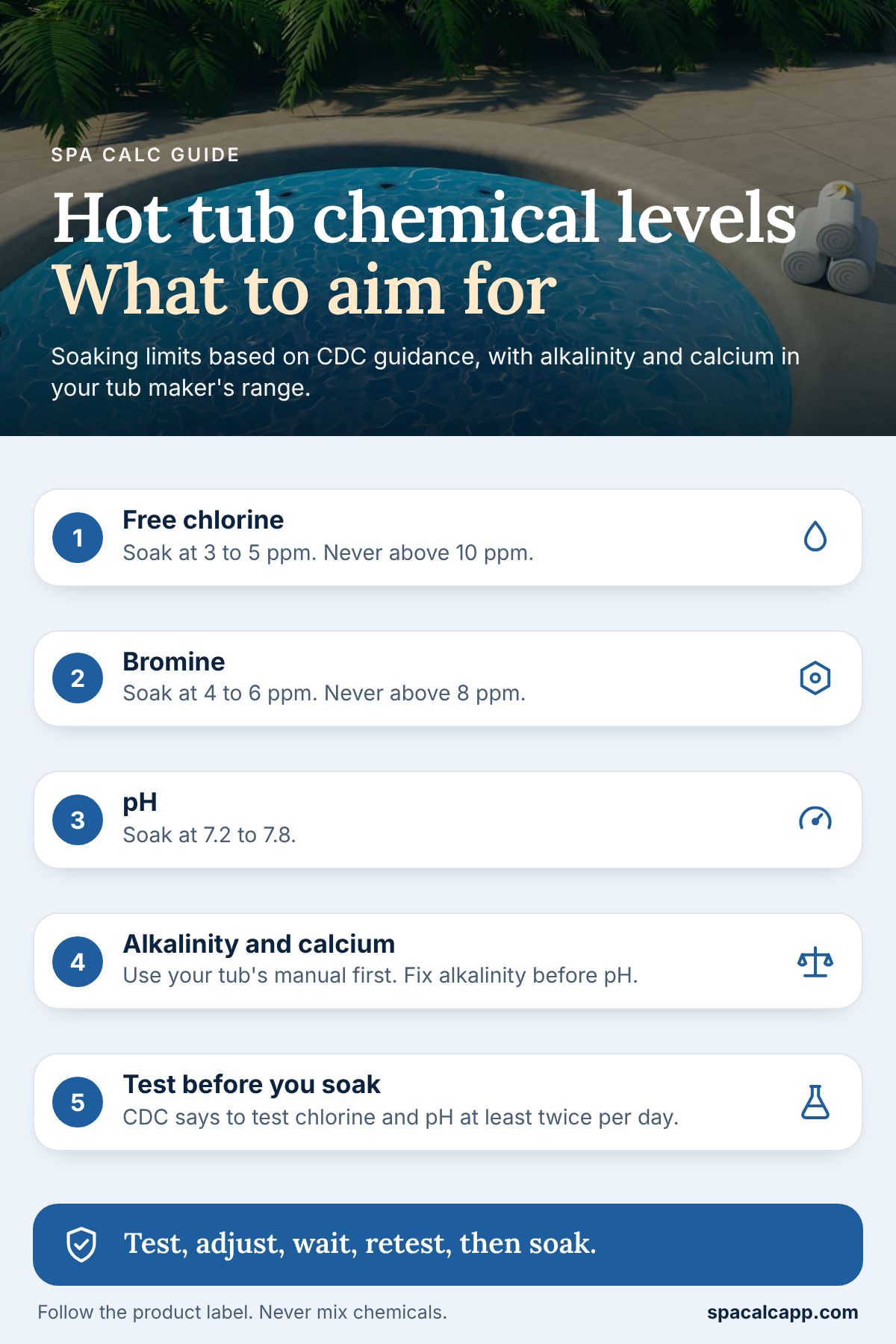
The quick answer: the hot tub chemical levels that matter most are your sanitizer and pH. Spa Calc's soaking limits, based on CDC guidance, are free chlorine 3–5 ppm or bromine 4–6 ppm, with pH 7.2–7.8. Keep total alkalinity and calcium in your tub maker's range, and keep stabilizer (CYA) out of a hot tub if you can. Follow the product label for anything you add.
All-in-one hot tub calculator
Not safe: do not get in yet.
Two things to fix. Start with ph.
pH 7.9 → 7.5
Lower it
Add
0.42oz
of Dry acid / pH minus (sodium bisulfate 93%)
12 gabout 2⅛ tsp by volume
- Side effects: TA −3 ppm.
- Run the jets with the lid open and wait at least 15 minutes (20 after pH decreaser) before anyone gets in.
- Never add acid and chlorine together or in the same spot: mixing them releases toxic chlorine gas. Let the first one circulate before adding the other (the wait is shown on each step).
Then wait 15 minutes with the jets running.
Free chlorine 1 ppm → 4 ppm
Raise it
Add
0.29oz
of Dichlor granules 56%
8.1 gabout 1⅞ tsp by volume
- Side effects: CYA +2.7 ppm, TA −1.1 ppm.
- Also raises cyanuric acid (stabilizer). It only comes down by replacing water.
- Run the jets with the lid open and wait at least 15 minutes (20 after pH decreaser) before anyone gets in.
- Free chlorine is below the minimum for your stabilizer level.
- Use dichlor for the first week or two until stabilizer reaches about 30 ppm.
In range
- CYA 20 ppm
- TA 70 ppm
- Use dichlor for the first week or two until stabilizer reaches about 30 ppm.
Check the product label. Strengths vary by brand, so enter the % printed on yours. Add one chemical at a time, into the water, and never mix chemicals.
- CDC recommends not using stabilizer (cyanuric acid) in hot tubs, because it slows chlorine down. The dichlor-then-bleach method keeps it to about 30 to 40 ppm; bleach only keeps it at zero.
Save this test and get a reminder before your next soak.
Want this every time you test?
Spa Calc remembers your hot tub and tells you if it’s ready to soak, and what to add, every time you test.
Spa Calc for iPhone
Hot tub chemical levels chart
The sanitizer and pH rows come from the same engine as Spa Calc, which uses one set of limits based on CDC guidance. The alkalinity and calcium rows are not set by CDC, so they come from the sources named in the table.
| Level | Ready to soak | Wait or fix first | Source |
|---|---|---|---|
| Free chlorine | 3–5 ppm | below 3: add chlorine; above 5: wait and retest; never above 10 | CDC, EPA labels, Spa Calc |
| Bromine | 4–6 ppm | below 4: add bromine; above 6: wait; never above 8 | CDC, Spa Calc |
| pH | 7.2–7.8 | 7.0–7.2: raise pH first; below 7.0 or above 7.8: don't soak | CDC, Spa Calc |
| Total alkalinity | 80–120 ppm (ideal) | Taylor's maximum is 180 ppm | Taylor Technologies, Bullfrog |
| Calcium hardness | 150–250 ppm | TroubleFreePool: keep it above 100 ppm | Taylor Technologies, Bullfrog |
| Stabilizer (CYA) | none | drain and refill above 40 ppm | CDC, Spa Calc |
Your tub's own manual comes first for alkalinity and calcium. Ranges differ between sources: TroubleFreePool's spa guide, for example, keeps alkalinity at 50 to 90 ppm. Hot tub alkalinity too high compares several makers' ranges.
What each level does
- Free chlorine or bromine is the sanitizer. CDC recommends at least 3 ppm chlorine in hot tubs and gives bromine as 4–8 ppm. Its Legionella toolkit sets a control range of 3–10 ppm free chlorine. Pick one sanitizer; bromine vs chlorine compares them.
- pH affects how well the sanitizer works and how the water feels. CDC's Legionella toolkit gives 7.2–7.8 for hot tubs.
- Total alkalinity buffers pH. Taylor Technologies gives 80–120 ppm as ideal and 180 ppm as the maximum.
- Calcium hardness protects the tub. Taylor gives 150–250 ppm for spas, and TroubleFreePool's spa guide says to keep it above 100 ppm.
- Stabilizer (CYA) has no place in most hot tubs: CDC recommends not using cyanuric acid, or chlorine products that contain it, in hot tubs. If dichlor has built it up, see hot tub cyanuric acid.
How to get your hot tub levels in range
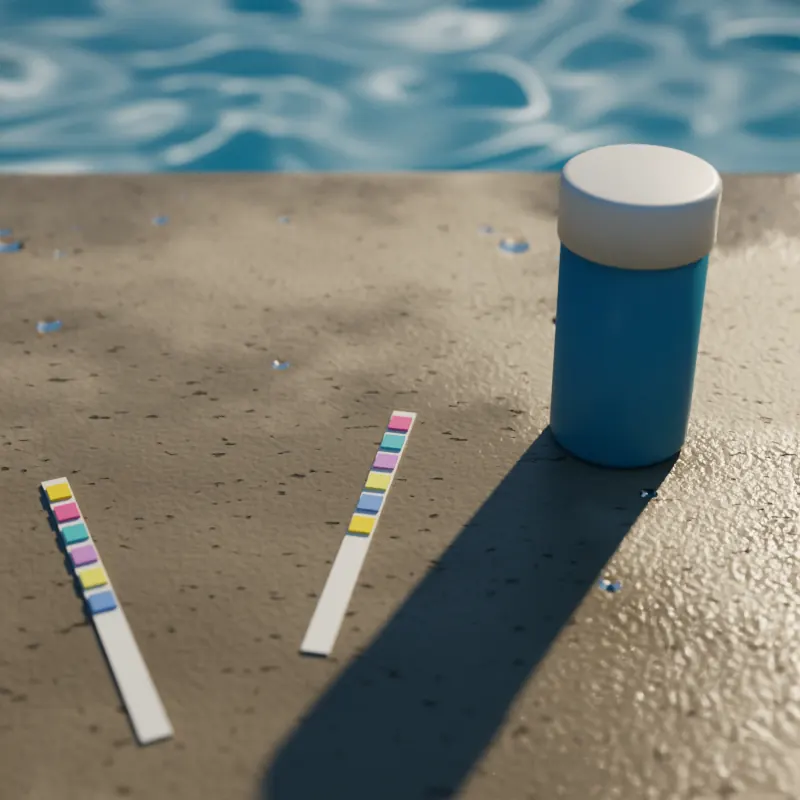
Step 1: Test before you soak. CDC says to test chlorine and pH at least twice per day, and more often when a number of people are using the hot tub. CDC also notes that test strips are less accurate than a DPD drop kit. Test alkalinity and calcium too after a refill, then about once a week. Hot tub test strips vs drops explains when each one is the better test.
Step 2: Fix alkalinity, then pH. Alkalinity steadies pH, so bring it into range first. The pH and alkalinity calculator works out the amounts for your readings. We don't give a fixed acid amount here because it depends on your alkalinity. See hot tub pH too high for the steps.
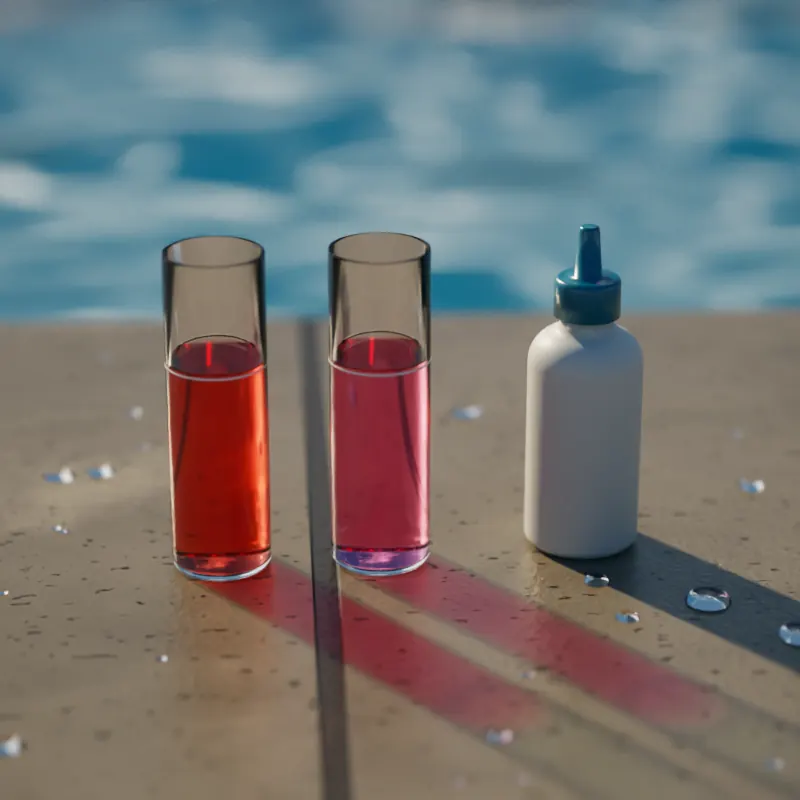
Step 3: Bring the sanitizer into range. For example, raising free chlorine from 1 to 4 ppm in a 400-gallon tub takes about 2.5 fl oz (73 mL) of 6% household bleach. US household bleach is sold at 6–8.25%, so use the calculator with the percentage on your own label rather than this example. Follow the product label, and add it with the jets running and the cover off. For bromine, see how much bromine to add.
Step 4: Wait, retest, then soak. Soak when free chlorine is 3 to 5 ppm and at least 7.5% of your CYA (bromine 4 to 6) and pH is 7.2 to 7.8, at least 15 minutes after adding anything (20 after pH decreaser); after chlorine, bromine or a shock, test again first. Above 5 ppm chlorine or 6 ppm bromine, wait and retest in an hour or two; never soak above 10 ppm chlorine or 8 ppm bromine, or with pH below 7.0 or above 7.8. Below 3 ppm chlorine (4 bromine), add sanitizer first; at pH 7.0 to 7.2, raise pH first; with CYA above 40 ppm, drain and refill. Hot tub limits based on CDC guidance and EPA product labels. Log the result in Spa Calc for iPhone so the next test starts from your last numbers.
Common mistakes
- Using pool numbers in a hot tub. CDC's minimum for hot tubs is 3 ppm, not a pool's 1 ppm.
- Chasing pH before alkalinity. pH keeps drifting back until alkalinity is in range.
- Forgetting stabilizer builds up. Every dose of dichlor adds some. Spa Calc keeps a log of each dose and reading, so a rising CYA shows up early.
- Soaking right after a dose. Wait, then retest.
Track it in Spa Calc
Spa Calc checks every reading against these limits, says whether the tub is ready to soak, and sizes each dose for the product you use. Get Spa Calc for iPhone and log your next test.
Sources
- CDC: Home Pool and Hot Tub Water Treatment and Testing: at least 3 ppm chlorine in hot tubs; no cyanuric acid or chlorine products with it in hot tubs; test chlorine and pH at least twice per day; test strips are less accurate than DPD kits.
- CDC: What You Can Do to Stay Healthy in Hot Tubs: chlorine at least 3 ppm; bromine 4–8 ppm.
- CDC: Controlling Legionella in Hot Tubs: free chlorine 3–10 ppm, bromine 4–8 ppm, pH 7.2–7.8.
- Taylor Technologies: Your Pool's Total Alkalinity Explained: total alkalinity ideal 80–120 ppm, maximum 180 ppm, for pool or spa water.
- Taylor Technologies: Understanding and Managing Calcium Hardness in Pool & Spa Water: calcium hardness 150–250 ppm in spas.
- Bullfrog Spas: Water Care Instructions: total alkalinity 80–120 ppm, calcium hardness 150–250 ppm, pH 7.2–7.8.
- TroubleFreePool Pool School: Spa & Hot Tub Maintenance, A Basic Guide: alkalinity 50–90 ppm; keep calcium above 100 ppm.
- Every limit and dose on this page comes from the same chemistry engine as Spa Calc.
Safety
- Keep chemicals out of reach of children and pets, and keep them out of the water until it is back in range.
- Never mix chemicals. Never add acid and chlorine together: mixing them releases toxic chlorine gas.
- Add chemicals to water, never water to chemicals.
- Store chemicals sealed, cool and dry, apart from each other.
- Read and follow the product label. It always comes first.