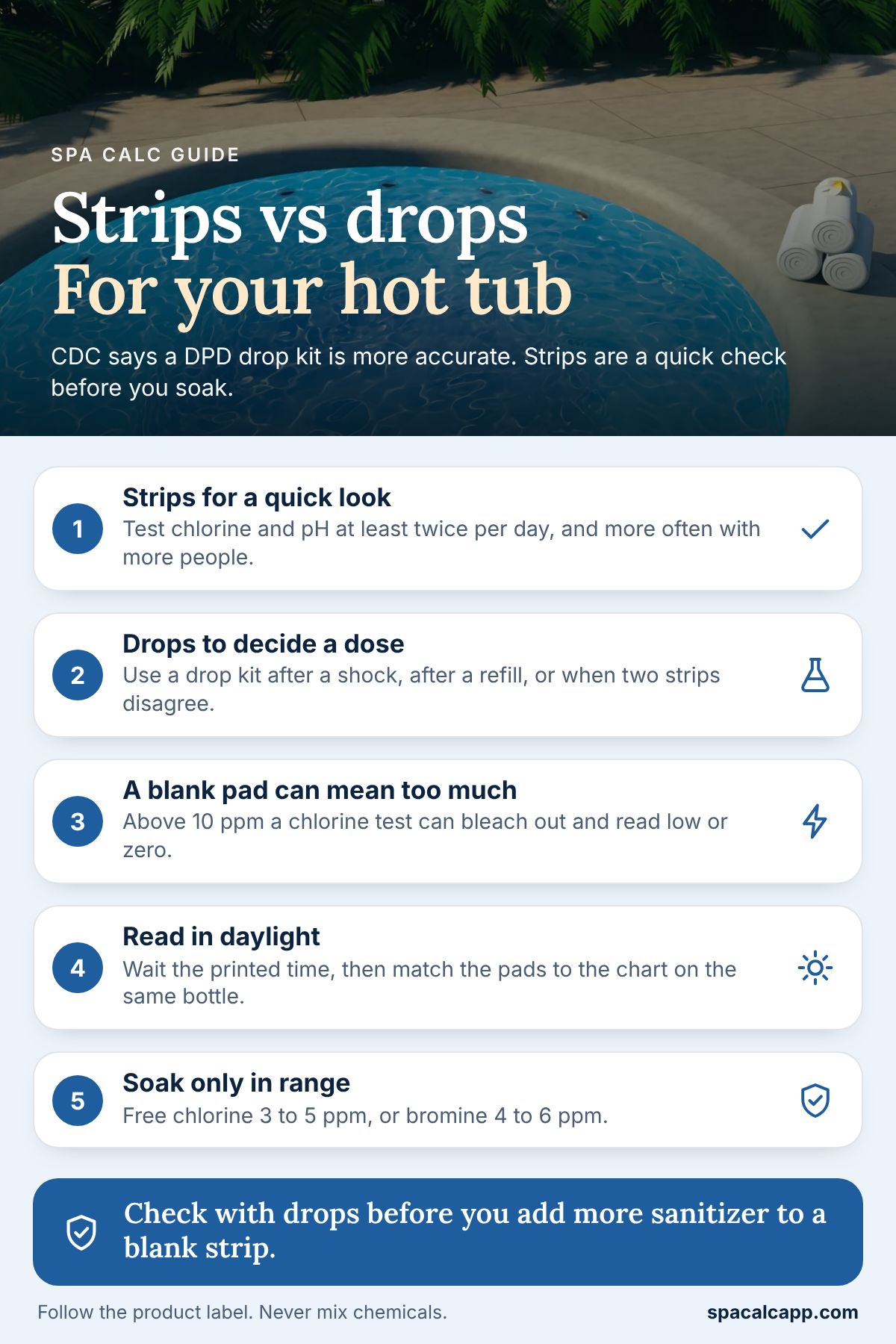
The quick answer: drops are more accurate. CDC says a DPD drop test kit gives the most accurate chlorine and pH results and that test strips are less accurate, so use strips for a quick check before you soak and a drop kit when a reading looks wrong or decides a dose. Spa Calc's soak range is 3–5 ppm free chlorine or 4–6 ppm bromine, and either test should tell you whether you're in it. Follow the product label for any chemical you add.
Ready to soak?
Wait 5 min
Give it at least 15 minutes with the jets running and the cover open, then retest.
- Soak range for free chlorine: 3 ppm to 5 ppm (and at least 7.5% of your CYA), with pH 7.2 to 7.8. Below pH 7.0 or above 7.8 it is not safe. Hot tub limits based on CDC guidance and EPA product labels; your product label comes first.
Save this test and get a reminder before your next soak.
Want this every time you test?
Spa Calc remembers your hot tub and tells you if it’s ready to soak, and what to add, every time you test.
Spa Calc for iPhone
Strips vs drops at a glance
| Test strips | Drop (DPD) kit | |
|---|---|---|
| How it works | Dip, wait, match pad colors to the chart on the bottle | Add drops to a water sample, then match a color or count drops |
| Accuracy, per CDC | Less accurate | Most accurate for chlorine and pH |
| High chlorine | Can bleach out above 10 ppm and read low or zero | FAS-DPD counts drops to a color change and reads up to 20 ppm |
| Time | About a minute | A few minutes |
| Good for | A quick look before each soak | Dosing decisions, odd readings, after a shock |
When strips are enough
Strips are quick, so they make it easy to test as often as CDC asks: chlorine and pH at least twice per day, and more often when a number of people are using the hot tub. If the strip says your sanitizer and pH are well inside the soak range and the water looks and smells normal, a strip is a fair check.
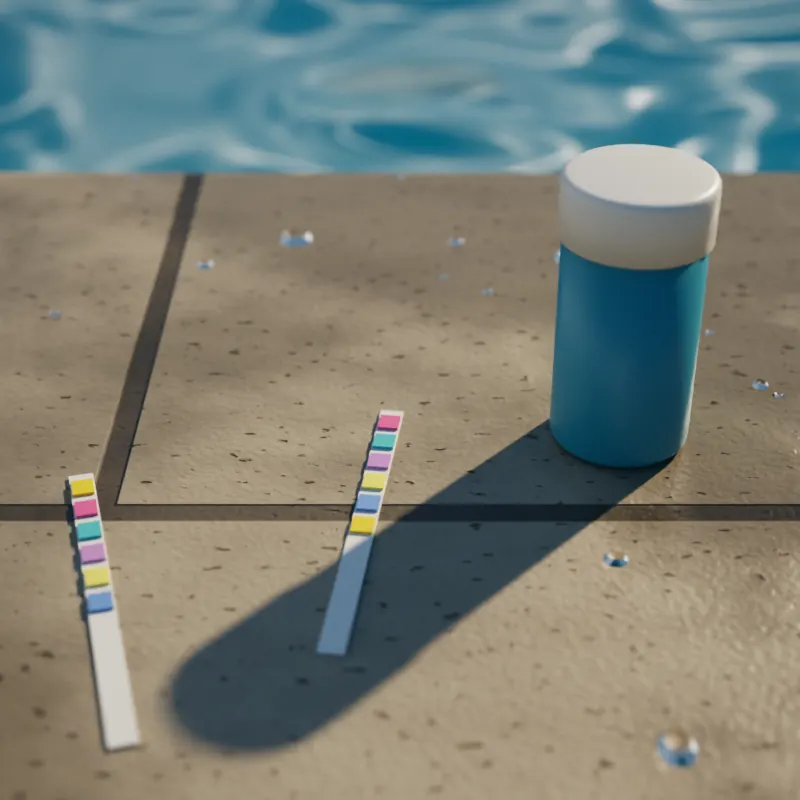
How to read a strip, step by step:
Step 1: Take a strip with dry hands and close the bottle at once. AquaChek's directions say to keep the cap closed tight between uses, store the bottle at room temperature, and not to use strips past the date on the bottle.
Step 2: Dip it as the directions say. One maker's spa strip directions say to dip the strip and remove it at once. Taylor Technologies points out that other strips are meant to be swirled or swished, and that the wrong motion spoils the colors.
Step 3: Hold it level and wait the printed time. Don't shake the water off. The same directions say to hold the strip level for 15 seconds before comparing; Taylor warns that reading at the wrong time gives unreliable results.
Step 4: Match the pads in daylight. Taylor recommends natural daylight and says to take sunglasses off. Read the sanitizer pad first, then pH, then the rest.
When to use a drop kit
Use drops when:
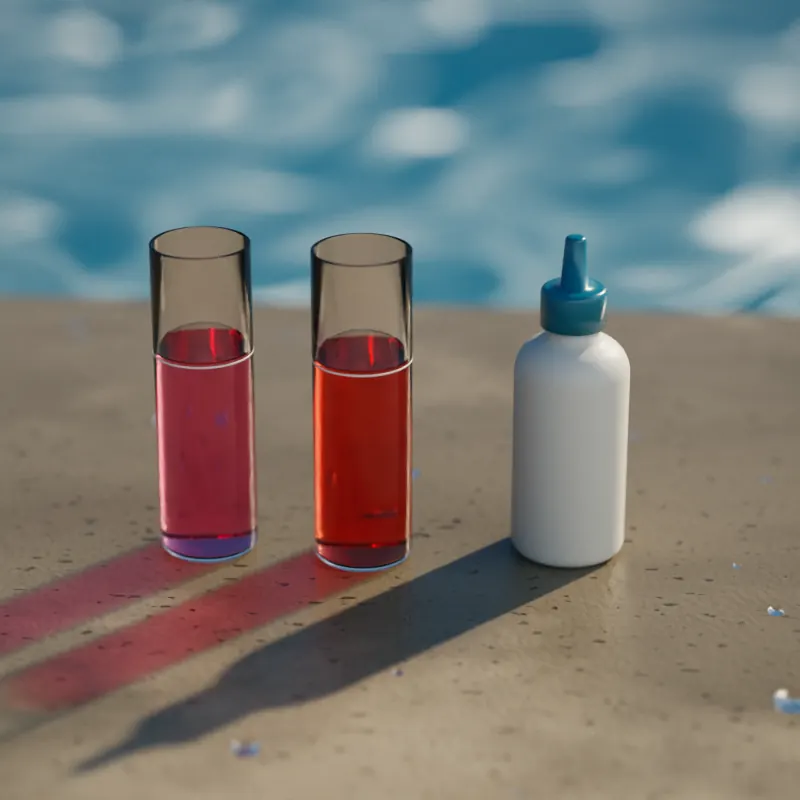
- The chlorine or bromine pad reads zero right after you added sanitizer. CDC notes that above 10 ppm a chlorine test can partly or fully bleach out and read falsely low or zero. Taylor's FAS-DPD test adds drops until the pink color disappears instead of matching a shade, so it reads free chlorine up to 20 ppm with no bleach-out.
- A reading is about to decide a dose, especially after a shock or a refill.
- Two strips disagree, or a pad lands between two colors on the chart.
- You see a total chlorine reading well above free chlorine. A drop kit that separates free and combined chlorine tells you whether to shock; how long to wait after shocking covers the next step.
What to do with the reading
Whichever test you use, compare it with the soak range: Soak when free chlorine is 3 to 5 ppm and at least 7.5% of your CYA (bromine 4 to 6) and pH is 7.2 to 7.8, at least 15 minutes after adding anything (20 after pH decreaser); after chlorine, bromine or a shock, test again first. Above 5 ppm chlorine or 6 ppm bromine, wait and retest in an hour or two; never soak above 10 ppm chlorine or 8 ppm bromine, or with pH below 7.0 or above 7.8. Below 3 ppm chlorine (4 bromine), add sanitizer first; at pH 7.0 to 7.2, raise pH first; with CYA above 40 ppm, drain and refill. Hot tub limits based on CDC guidance and EPA product labels.
Sanitizer low. For example, raising free chlorine from 1 to 4 ppm in a 400-gallon hot tub takes about 0.29 oz (8.1 g) of 56% dichlor granules. Follow the product label, add it with the jets running and the cover off, and test again before you get in. How much chlorine for a hot tub has more examples, and hot tub chemical levels gives the full chart.
pH off. CDC's hot tub guidance gives pH 7.2 to 7.8. The amount of pH decreaser depends on your alkalinity, so use the pH and alkalinity calculator instead of a fixed number; hot tub pH too high explains why.
Log each reading in Spa Calc for iPhone with the time, so you can see how fast your tub uses sanitizer between soaks.
Can you use pool test strips in a hot tub?
You can if the strip measures your sanitizer, chlorine or bromine, and its chart reaches hot tub levels. Hot tubs run higher than pools: CDC asks for at least 3 ppm chlorine in hot tubs, against at least 1 ppm in pools. Many pool strips also have a stabilizer (CYA) pad. CDC recommends not using cyanuric acid, or chlorine products that contain it, in hot tubs, and Spa Calc suggests draining and refilling once CYA passes 40 ppm; hot tub cyanuric acid explains why.
Common mistakes
- Using another brand's chart. Each maker's pads and colors differ, and Taylor advises against interchanging products from different makers.
- Leaving the bottle open by the tub. Steam and humid air spoil the strips in the bottle.
- Reading too late. Colors keep changing after the printed read time.
- Adding more sanitizer because the strip went blank. A bleached-out pad can mean too much, not too little. Check with drops first.
- Not keeping a record. Spa Calc keeps every reading and dose in one log, so a tub that eats sanitizer faster than usual stands out.
Track it in Spa Calc
Enter your strip or drop readings in Spa Calc and it tells you whether the water is in the soak range and how much of your own product to add if it isn't. Get Spa Calc for iPhone and log your next test.
Sources
- CDC: Home Pool and Hot Tub Water Treatment and Testing: DPD kits give the most accurate chlorine and pH results and test strips are less accurate; at least 3 ppm chlorine in hot tubs and at least 1 ppm in pools; no cyanuric acid in hot tubs; test chlorine and pH at least twice per day; above 10 ppm a chlorine test can bleach out; follow the test maker's directions.
- CDC: Controlling Legionella in Hot Tubs: pH 7.2–7.8 in hot tubs.
- Taylor Technologies: Best Practices When Testing Water: dip, swirl or swish as instructed; wrong wait times give unreliable results; match colors in natural daylight, without sunglasses; don't interchange products from different makers.
- Taylor Technologies: FAS-DPD Testing for Accurate Free and Combined Chlorine Values: reads free and combined chlorine from 0.2 to 20 ppm by drop count, with no color matching and no bleach-out.
- AquaChek (Hach): spa strip directions leaflet: dip and remove immediately, hold level for 15 seconds without shaking, compare pads to the chart on the label; keep the cap closed, store at room temperature, use by the expiration date.
- Every limit and dose on this page comes from the same chemistry engine as Spa Calc.
Safety
- Keep chemicals out of reach of children and pets, and keep them out of the water until it is back in range.
- Never mix chemicals. Never add acid and chlorine together: mixing them releases toxic chlorine gas.
- Add chemicals to water, never water to chemicals.
- Store chemicals sealed, cool and dry, apart from each other.
- Read and follow the product label. It always comes first.