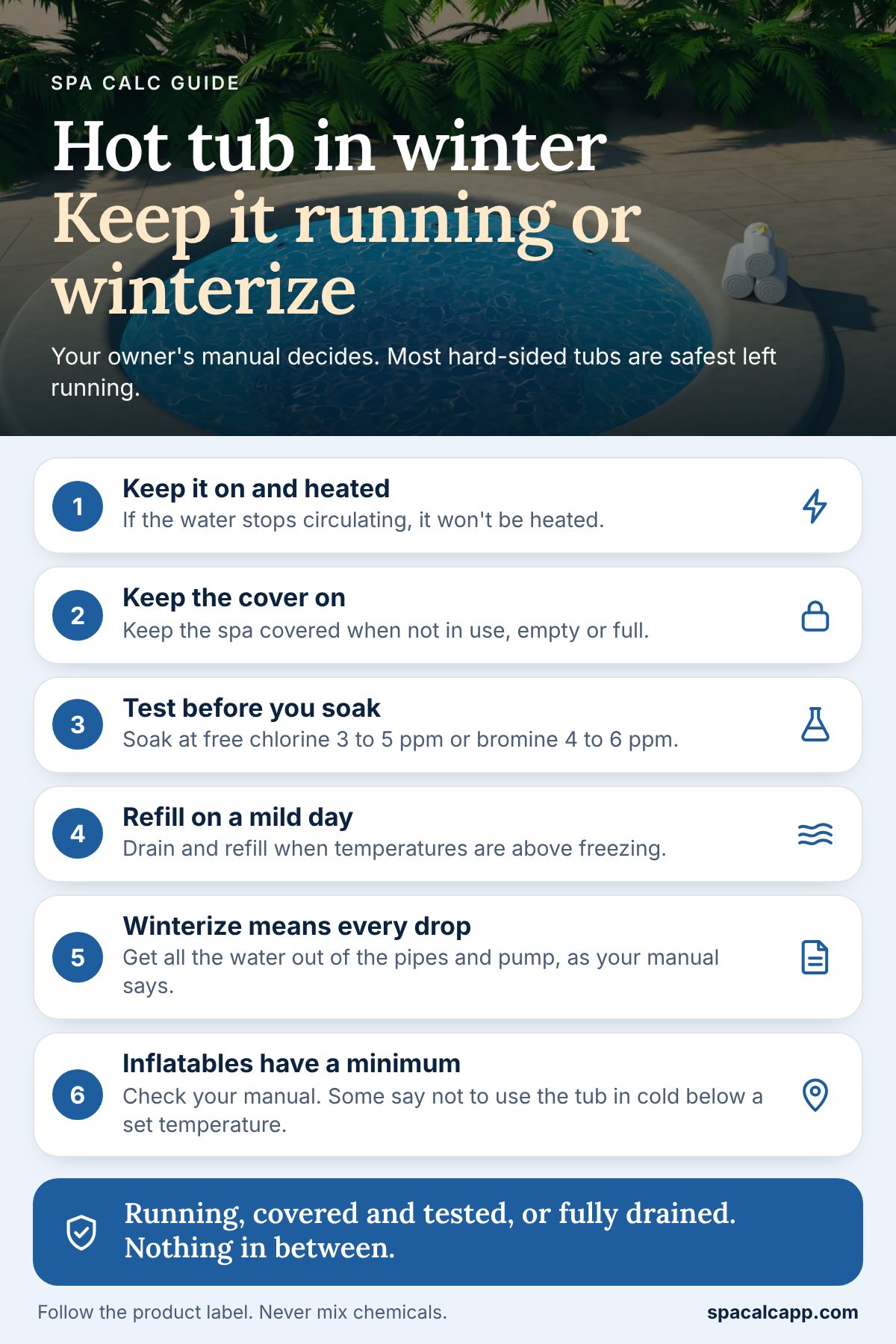
The quick answer: a hard-sided hot tub in winter is usually safest left running: heated, covered and topped up, with the same water care as summer. Drain and winterize it only if it will sit unused through hard freezes, and then every drop has to come out of the pipes too. Inflatable tubs are different: makers such as Bestway say not to use or leave them set up below about 4 °C (39 °F). Whichever you choose, keep free chlorine at 3–5 ppm (or bromine 4–6 ppm) while there is water in the tub, and follow the product label for anything you add.
Drain interval calculator
67days
between drains
about 2.2 months
400 gal ÷ 3 ÷ 2 soakers a day = 67 days.
- Draining at this rate takes about 1.3 hours. Refilling with a hose takes about as long again.
- Drain sooner if the water stays cloudy or foamy after shocking, smells even when sanitizer is in range, or if CYA climbs above 40 ppm.
- Flush the plumbing with a line cleaner before you drain, then clean the filter.
Save this test and get a reminder before your next soak.
Want this every time you test?
Spa Calc remembers your hot tub and tells you if it’s ready to soak, and what to add, every time you test.
Spa Calc for iPhone
Keep it running or winterize: how to choose
Your owner's manual decides, but the makers' advice lines up:
| Your situation | What makers say | Main risk |
|---|---|---|
| Hard-sided tub, used through winter | Keep it running, heated and covered | Loss of heat if the water stops circulating |
| Hard-sided tub, unused for months in severe cold | Drain fully and winterize | Water left in pipes or pump |
| Inflatable tub, below the maker's minimum | Take it down, dry it and store it indoors | Freezing damage to liner, pump and heater |
Hot Spring's owner's manual calls its spas designed for year-round use in any climate, and its winter guide says it's best to keep a hot tub running. The same manual says that if the spa will sit unused for a long time in severely cold weather, you should drain and winterize it. Caldera explains why: if the water stops circulating, it won't be heated.
Using a hot tub through the winter
Step 1: Keep it on, heated and covered. A running tub moves warm water through the pipes, which is what keeps them from freezing. Hot Spring's manual says to always keep the spa covered when not in use, empty or full. Check the cover sits tight after every soak.
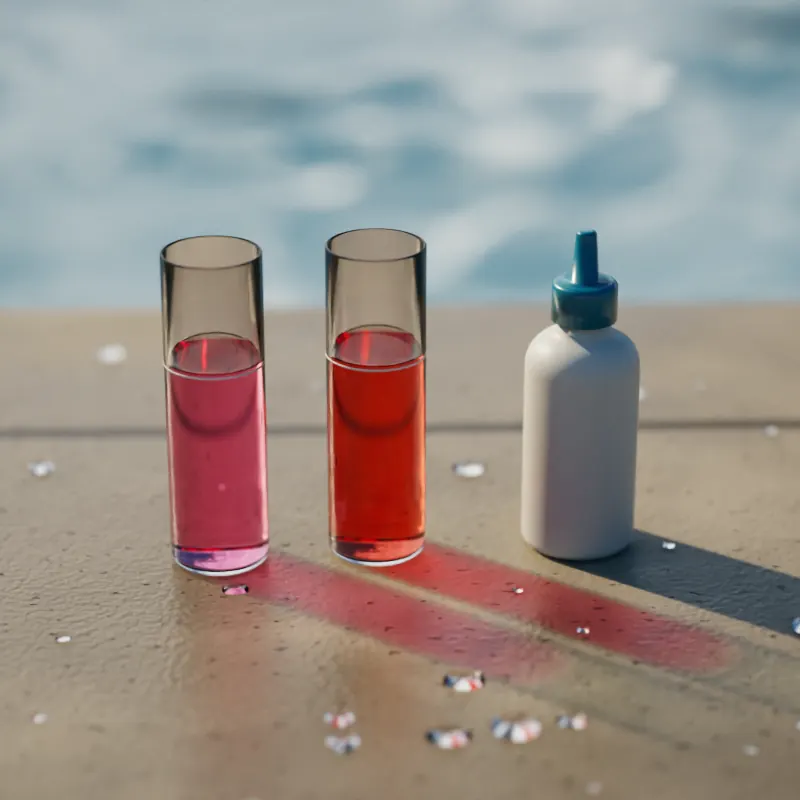
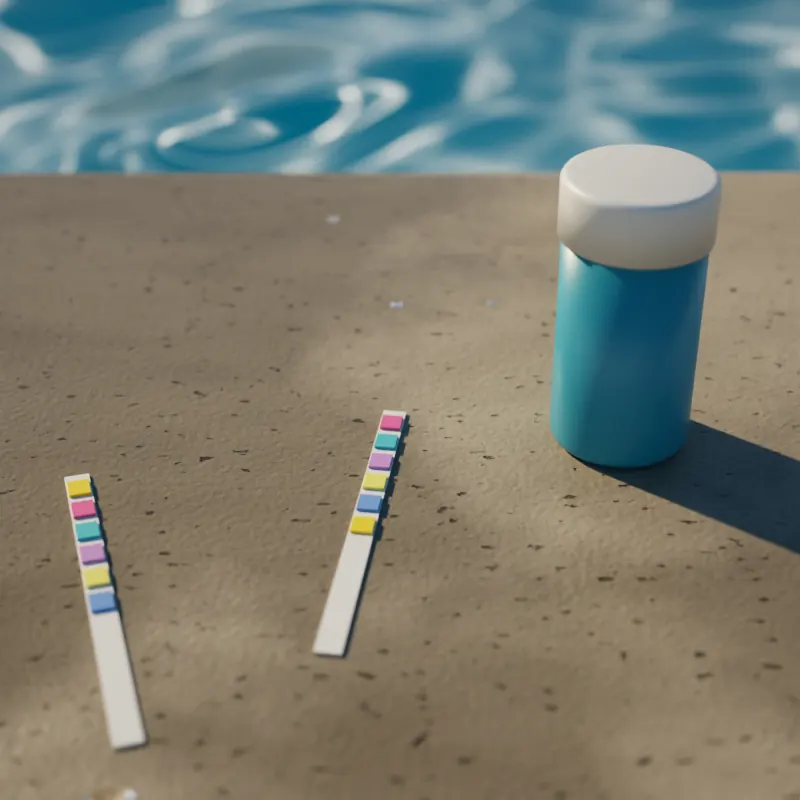
Step 2: Keep sanitizer in range and test before you soak. Cold air doesn't change what the water needs. CDC recommends at least 3 ppm free chlorine in hot tubs and says to test chlorine and pH at least twice per day, and more often when a number of people are using it. Spa Calc's ready-to-soak rule, based on CDC guidance: Soak when free chlorine is 3 to 5 ppm and at least 7.5% of your CYA (bromine 4 to 6) and pH is 7.2 to 7.8, at least 15 minutes after adding anything (20 after pH decreaser); after chlorine, bromine or a shock, test again first. Above 5 ppm chlorine or 6 ppm bromine, wait and retest in an hour or two; never soak above 10 ppm chlorine or 8 ppm bromine, or with pH below 7.0 or above 7.8. Below 3 ppm chlorine (4 bromine), add sanitizer first; at pH 7.0 to 7.2, raise pH first; with CYA above 40 ppm, drain and refill. Hot tub limits based on CDC guidance and EPA product labels. Log each test in Spa Calc for iPhone so a missed weekend doesn't turn into a cloudy tub.
Step 3: Watch the water level. Caldera says to make sure the water doesn't fall below the skimmer level. Top up on a mild day, and follow your manual for the exact line.
Water care through the winter
- Top-ups. If chlorine is low, a small dose brings it back. Raising free chlorine from 1 to 3 ppm in a 400-gallon tub takes about 1.7 fl oz (49 mL) of 6% unscented bleach. US household bleach is sold at 6–8.25%, so use the hot tub chlorine calculator with the percentage on your own label. Follow the product label.
- Water changes. Heavy winter use still wears the water out. With two people soaking a day, the engine behind Spa Calc gives a 400-gallon tub about 67 days between water changes. Use the drain interval calculator for your own tub and use.
- Refilling in cold weather. Caldera says to drain and refill when temperatures are above freezing, and Hot Spring's manual does not recommend refilling below 10 °C (50 °F). How to drain a hot tub walks through the job.
Winterizing a hard-sided hot tub
If the tub will sit unused through hard freezes, winterizing means getting all the water out, not just most of it. Caldera's winter advice is to make sure all water is out of the pipes and the spa. Hot Spring's manual says a wet/dry shop vacuum, used as a vacuum or blower, is needed to clear the lines properly. Every model is plumbed differently, so follow your own manual step by step, and if you're unsure, ask your dealer. Leave the cover on over the empty tub.
Inflatable hot tubs in winter
Inflatable tubs have their own limits, and the maker's manual sets them. Bestway's Lay-Z-Spa manual, for example, says not to use the spa when the air temperature is below 4 °C (39 °F), and not to set it up or leave it out at those temperatures. For winter it says to take the spa down, make sure the spa and pump are completely dry, and store them indoors, because freezing can severely damage the spa. Some newer Lay-Z-Spa models have a Freeze Shield mode, which Bestway says heats the water to 10 °C when the outside temperature drops below 6 °C. Lay-Z-Spa owners using it through winter are also told to keep up their chemical maintenance.
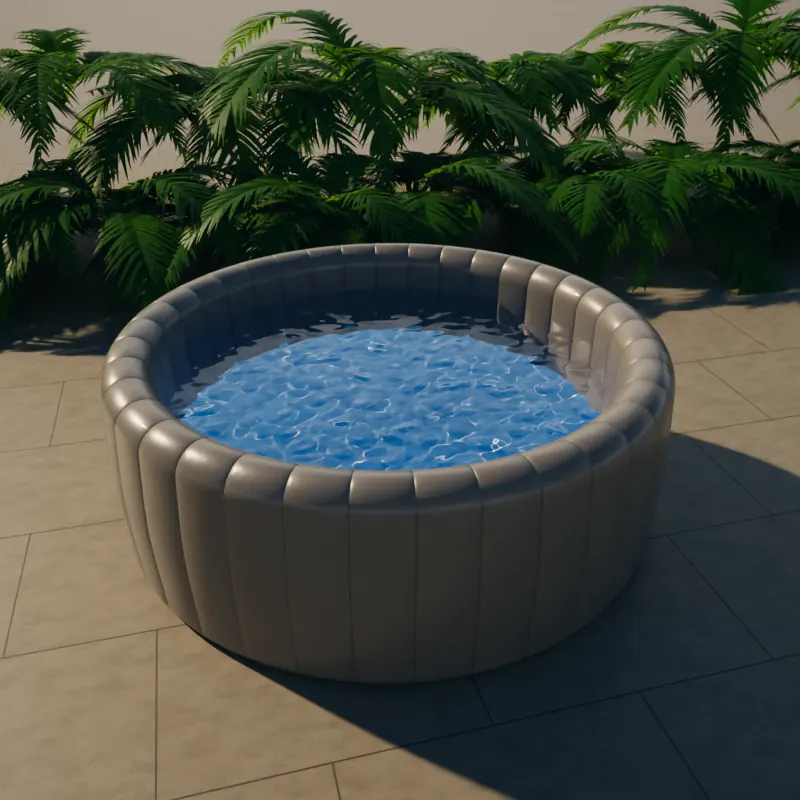
If you're storing an inflatable tub, drain it fully first; inflatable hot tub chemicals covers the water care when you set it up again in spring.
Common mistakes
- Switching the tub off but leaving water in it. With no circulation there's no heat, and standing water in the pipes can freeze.
- Draining most of the water. Water left in the pump and lines is what freezes. Clear them the way your manual says.
- Skipping water care because the tub is used less. Sanitizer still runs down. Spa Calc reminds you when a test is due, even in a quiet month.
- Refilling on a freezing day. Wait for a mild day so the tub is heating again right away.
Track it in Spa Calc
Spa Calc logs every test and dose, tells you when your tub is ready to soak, and counts down to the next water change for your tub size and how often you use it. Get Spa Calc for iPhone and log your next winter test.
Sources
- Hot Spring: Highlife owner's manual (PDF): designed for year-round use in any climate; drain and winterize a spa left unused for a long time in severely cold weather; a wet/dry shop vacuum is needed to remove water from the lines; keep the spa covered, empty or full; refilling below 10 °C (50 °F) not recommended.
- Hot Spring: How to Winterize your Hot Tub: it's best to keep a hot tub running.
- Caldera Spas: How do I prepare my hot tub for winter?: get all water out of the pipes and spa; if the water stops circulating it won't be heated; keep the water above the skimmer; drain and refill when temperatures are above freezing.
- Bestway: Lay-Z-Spa Riviera AirJet owner's manual (PDF): do not use below 4 °C (39 °F); do not set up or leave out below 4 °C; take down, dry and store indoors for winter; freezing can severely damage the spa.
- Lay-Z-Spa UK: Freeze Shield: heats the water to 10 °C when outside temperatures drop below 6 °C.
- Lay-Z-Spa UK: Looking After a Lay-Z-Spa in Winter: keep up chemical maintenance in winter.
- CDC: Home Pool and Hot Tub Water Treatment and Testing: at least 3 ppm chlorine in hot tubs; test chlorine and pH at least twice per day.
- Every level, dose and drain interval on this page comes from the same chemistry engine as Spa Calc.
Safety
- Keep chemicals out of reach of children and pets, and keep them out of the water until it is back in range.
- Never mix chemicals. Never add acid and chlorine together: mixing them releases toxic chlorine gas.
- Add chemicals to water, never water to chemicals.
- Store chemicals sealed, cool and dry, apart from each other.
- Read and follow the product label. It always comes first.