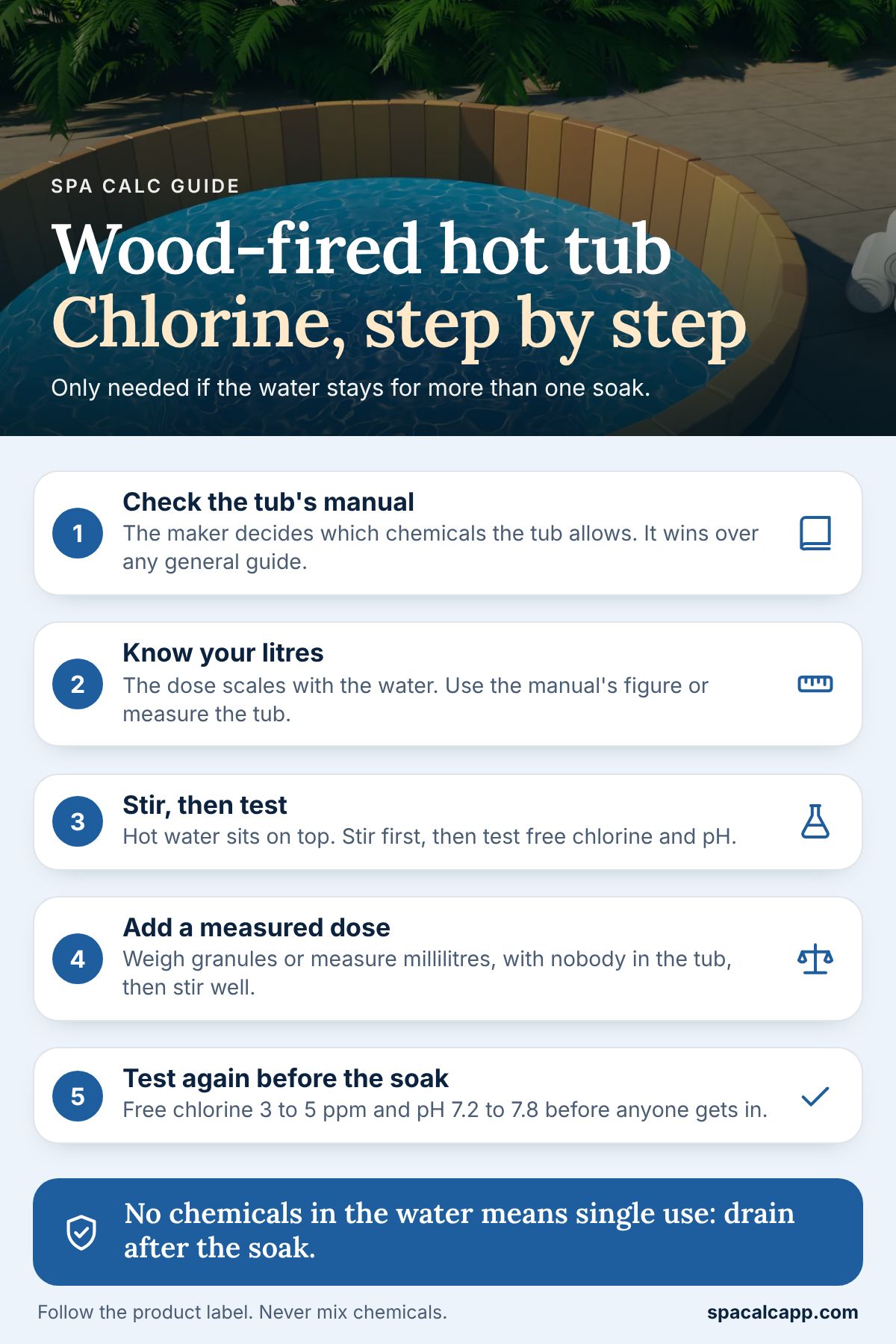
The quick answer: a wood-fired hot tub (a palju in Finland) needs chlorine only if you keep the water for more than one bathing session. If you do, bring free chlorine to 3–5 ppm before anyone gets in. For a fresh 1,500 L fill, that is about 8 g of 56% dichlor granules or 30 mL of 150 g/L liquid chlorine. Follow the product label.
To raise free chlorine by 1 ppm (1 mg/L):
| Water in the tub | 56% dichlor granules | 150 g/L liquid chlorine |
|---|---|---|
| 1,000 L | 1.8 g | 7 mL |
| 1,500 L | 2.7 g | 10 mL |
| 2,000 L | 3.6 g | 13 mL |
Multiply by the ppm you need. The calculator does it for your litres and the strength printed on your product.
Hot tub chlorine calculator
Add
0.29oz
of Dichlor granules 56%
8.1 gabout 1⅞ tsp by volume
Raises free chlorine from 1 ppm to 4 ppm in 400 gal.
- Side effects: CYA +2.7 ppm, TA −1.1 ppm.
- Also raises cyanuric acid (stabilizer). It only comes down by replacing water.
- Run the jets with the lid open and wait at least 15 minutes (20 after pH decreaser) before anyone gets in.
- Pour it slowly in front of a return jet with the pump running.
Check the product label. Strengths vary by brand, so enter the % printed on yours. Add one chemical at a time, into the water, and never mix chemicals.
Use dichlor for the first week or two until stabilizer reaches about 30 ppm.
Save this test and get a reminder before your next soak.
Want this every time you test?
Spa Calc remembers your hot tub and tells you if it’s ready to soak, and what to add, every time you test.
Spa Calc for iPhone
First decide: one soak, or keep the water
A wood-fired tub is different from an electric spa. Most have no pump, no filter and no heater running between uses. That gives you two ways to run it.
- Fresh water every time. Fill, heat, bathe, drain, then wash and dry the tub. No chlorine is needed, because the water never sits. One tub maker's manual puts it plainly: only chemicals and a filter keep the same water clean and hygienic for a long time.
- Keep the water for several days. Water that stays in the tub needs a sanitizer every day it is there, and a test before every soak. CDC's guidance for hot tubs is at least 3 ppm chlorine and a pH of 7.0–7.8 (CDC).
If you are not sure which one you are, you are the first one. Drain after the soak.
Check your tub's manual before you buy chemicals
Wooden tubs and their stoves have metal parts in the water, so the maker decides which chemicals are allowed. The manual we checked for this guide (see Sources) says:
- Follow the dosing on the chemical's package. Too large a dose can corrode parts of the tub.
- Watch pH whenever you use chemicals. That manual asks for pH 7.0–7.6, and warns that chemical use tends to pull pH down.
- Do not use swimming pool chemicals in a small tub. Their doses are sized for far more water.
- Tablets, where the manual allows them at all, go in a dispenser and never straight into the tub.
Your manual may differ. It wins over any general guide, including this one. This is also why the dose is worth measuring: a small tub leaves little room for error, and Spa Calc for iPhone works the amount out for your exact litres.
How to chlorinate a wood-fired hot tub, step by step
Step 1: Know your litres. The dose scales with the water, and round wooden tubs range widely. Use the figure in your manual, or measure the inside diameter and the water depth and put them in the hot tub volume calculator. How many gallons in a hot tub explains the maths.
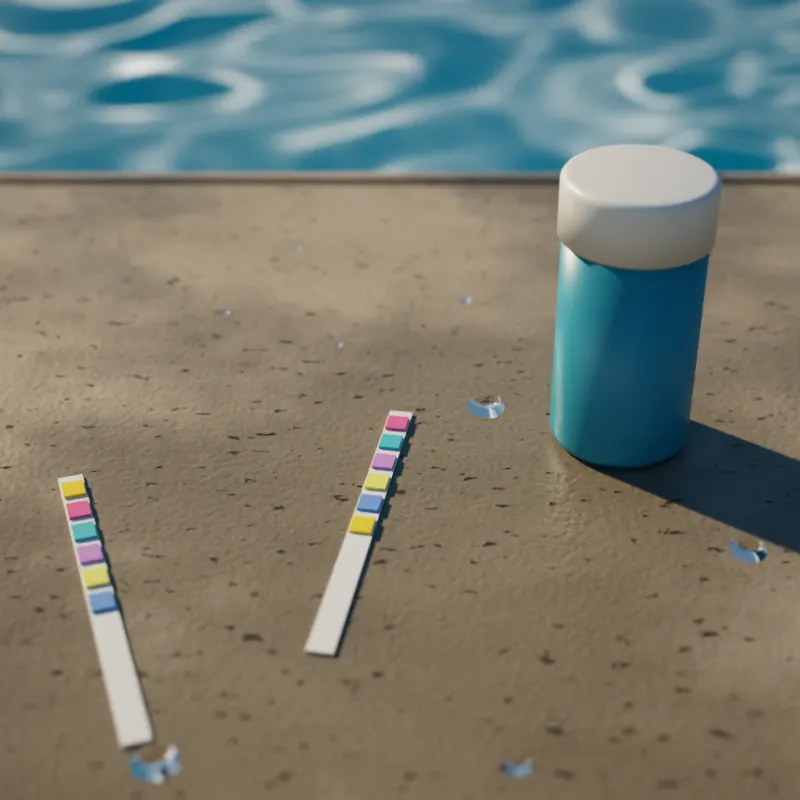
Step 2: Stir, then test. A wood-fired tub has no jets, and the hot water sits on top. Stir with the paddle first so the sample is mixed. Test free chlorine and pH. If pH is outside 7.2–7.8, fix that first with the pH and alkalinity calculator, because chlorine works poorly at high pH.
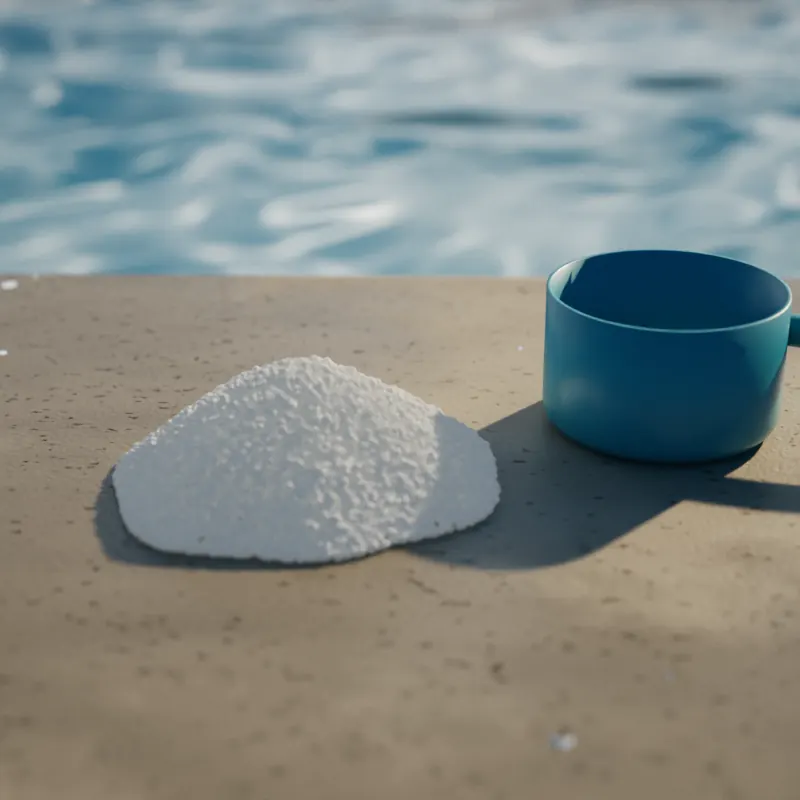
Step 3: Add the measured dose with nobody in the tub. Weigh granules on a kitchen scale, or measure liquid in millilitres. Add it the way the product label says, then stir the whole tub well. Follow the product label.
Step 4: Wait, stir and test again before anyone gets in. Soak when free chlorine is 3 to 5 ppm and at least 7.5% of your CYA (bromine 4 to 6) and pH is 7.2 to 7.8, at least 15 minutes after adding anything (20 after pH decreaser); after chlorine, bromine or a shock, test again first. Above 5 ppm chlorine or 6 ppm bromine, wait and retest in an hour or two; never soak above 10 ppm chlorine or 8 ppm bromine, or with pH below 7.0 or above 7.8. Below 3 ppm chlorine (4 bromine), add sanitizer first; at pH 7.0 to 7.2, raise pH first; with CYA above 40 ppm, drain and refill. Hot tub limits based on CDC guidance and EPA product labels.
Step 5: Dose after the soak if the water stays. People bring the contaminants, so chlorine drops after use. Test, top up to the range again, and cover the tub. How often to add chlorine to a hot tub has a simple routine, and logging each test in Spa Calc shows how much your tub uses per soak.
How long can the water stay?
The drain interval calculator gives a schedule for tubs with a sanitizer and a filter. Most wood-fired tubs have no filter, so nothing removes what bathers leave behind, and the manual is clear that it takes both chemicals and a filter to keep water for long. Without a filter, plan on changing the water after a few days, and at once if it turns cloudy, smells or foams. Hot tub cloudy water covers what each sign means.
In freezing weather the question often answers itself. The manual warns not to leave water in the tub unheated below zero, because the stove, drain pipe and taps freeze easily. In winter, drain after the soak.
Common mistakes
- Keeping the water "just one more day" with nothing in it. Untreated warm water is single use.
- Dosing by the capful. Strengths differ between products. Weigh or measure, and use the percentage on your label.
- Dropping tablets into the tub. Where a manual allows tablets, it wants them in a dispenser.
- Skipping pH. Low pH is what corrodes metal parts, and high pH makes chlorine weak.
- Adding chemicals while people are in the water.
- Guessing the volume. A tub filled to the bench holds much less than a tub filled to the brim.
Track it in Spa Calc
Spa Calc gives the dose for your tub's litres and your product in grams or millilitres, and its ready-to-soak check compares your test with the soak range: soak now, wait, or add this first. One hot tub is free, with every feature.
Sources
- CDC: What You Can Do to Stay Healthy in Hot Tubs: at least 3 ppm chlorine and pH 7.0–7.8 in hot tubs; test before getting in.
- Kirami Oy: Instructions for use, Original Tiny hot tubs (2020), Hygiene section: only chemicals and a filter keep water clean for long; follow package dosing; overdosing can corrode parts; pH 7.0–7.6; no pool chemicals in small tubs; tablets only in a dispenser; do not leave water unheated below zero.
Safety
- Keep chemicals out of reach of children and pets, and keep them out of the water until it is back in range.
- Never mix chemicals. Never add acid and chlorine together: mixing them releases toxic chlorine gas.
- Add chemicals to water, never water to chemicals.
- Store chemicals sealed, cool and dry, apart from each other.
- Read and follow the product label. It always comes first.